Bedding · Materials Guide
Organic Latex Materials: How to Read Fiber and Certification Labels
A mattress label can make a bed sound refreshingly simple: organic latex, cotton, wool. But those words describe different materials, production steps, and standards. Here’s how to read the details, compare certifications, and understand what a label can—and cannot—tell you.
Published November 27, 2026
Shopping for an organic mattress can feel like decoding a tidy little vocabulary test. Latex may appear beside cotton and wool; a certification logo may sit nearby; and a broad phrase such as “natural” or “organic” can seem to cover the whole bed. The key is to slow down and treat each part of the construction as its own story.
A mattress is not one ingredient. It may include a latex comfort layer, a cotton cover, wool batting, springs, adhesives, thread, and other components. Each material has a different origin and function, and a certification may apply to one component, a particular material, or a finished product under defined rules. Looking for specifics is more useful than relying on a single reassuring-sounding word.
This guide explains common latex, cotton, and wool terms, shows how to interpret certification language, and offers a practical checklist for comparing descriptions. It is an information guide, not a guarantee that any particular material or label will suit every sleeper.
Start with the parts, not the headline
Product titles are designed to be brief. A heading such as “organic latex mattress” does not necessarily explain every layer beneath the cover. Look for a materials list or construction breakdown that identifies what is used, where it appears, and—when available—how much of the product it represents.
For example, “latex” could refer to a substantial core, a thinner comfort layer, or a component blended with other materials. “Organic cotton” might describe the ticking, the batting, or both. Wool may be used as a quilted layer or as part of a fire-barrier construction. Those distinctions matter because each ingredient performs a different job and may have separate sourcing and certification records.
Descriptions that name materials by layer are especially useful. A clear listing might identify a latex core, wool wrapping, and a cotton encasement rather than grouping all three under a general natural-material claim. If a description gives only broad language, look for a specification sheet, label, or manufacturer explanation that fills in the gaps.
- Ask what the material is: Is the latex Dunlop or Talalay? Is the cotton fabric, fill, or both?
- Ask where it is used: Is it in the core, comfort layer, cover, or another component?
- Look for proportions: Does the description state a percentage, layer thickness, or other meaningful quantity?
- Separate the components: Which materials are certified, and which are not specifically identified?
What “latex” means in a mattress
Latex is a flexible material used in mattress cores and comfort layers. In product descriptions, it may be made from natural rubber latex, synthetic latex, or a blend. Natural rubber latex is derived from rubber tree sap, but the words “natural latex” alone do not establish that the material is certified organic. Sourcing claims and certification details need to be checked separately.
Manufacturers may identify latex by its production method. Dunlop and Talalay are commonly used names for different manufacturing processes. Both refer to ways of producing latex foam, not organic certifications. The process name can help explain construction, but it does not, by itself, verify the latex’s agricultural origin or the full contents of a mattress.
When a label says “organic latex,” look for the exact standard and the scope of the claim. Does the certification apply to the latex material, a component, or the finished mattress? Is the material described as certified organic, or does the manufacturer simply use the word “organic” in its own product copy? A label or current certificate can help resolve that difference.
Some mattresses combine latex with other materials. A latex layer may sit above pocketed coils, for instance, while cotton and wool appear in the cover and surrounding layers. That can be a meaningful construction description, but it is not the same as saying that every part of the mattress is made from certified organic materials.
Cotton: follow the fiber through the cover
Cotton may be used as ticking, a quilted surface, batting, or an encasement. Labels can distinguish among these forms, so check whether the claim refers to the entire fabric or only a portion of the mattress. “Cotton cover” is a fiber description; it does not, on its own, say whether the cotton was organically grown or how the textile was processed.
Organic cotton claims concern agricultural sourcing under a named standard. A textile certification may also set requirements for processing and handling, depending on the standard and the product’s certification scope. This is why the certificate matters: it clarifies whether the claim covers the cotton fiber alone, the finished textile, or a broader product category.
Also notice whether the label gives a composition percentage. A fabric might be all cotton or a blend containing cotton and another fiber. If the product description says “organic cotton cover,” look for details about the fabric and any blended components rather than assuming every thread, seam, or layer has the same status.
Wool: a distinct material with distinct claims
Wool is often used in bedding as batting or as a layer around other mattress materials. It can help manage moisture and contribute to a mattress’s overall feel, but performance depends on the product’s construction and the sleeper’s experience. Wool’s presence does not automatically mean that the latex or cotton in the same mattress is organic.
Wool descriptions may refer to fiber origin, processing, or a role in the mattress. If the product says “organic wool,” check whether the claim is supported by a named certification and whether that certification applies to the wool used in the finished product. A statement that wool is natural, untreated, or sourced from a particular region is not interchangeable with an organic certification.
Care deserves attention, too. Some wool-filled items require spot cleaning or professional care, while other bedding may be washable. Follow the care label for the specific product; a material’s general reputation is no substitute for the manufacturer’s instructions. For a mattress, ask whether the cover is removable and whether the internal layers can be cleaned at home before assuming they can be washed.
Certification labels: what they can tell you
Certifications are useful because they replace a vague claim with a defined set of criteria and a verification process. But certifications are not all interchangeable. Some focus on organic agricultural inputs or textile processing; others assess emissions or chemical restrictions. A logo should be read together with the name of the standard, the certificate holder, and the scope covered.
GOLS is a standard associated with organic latex. When a product description refers to GOLS certification, check the certificate or supporting documentation to understand which latex material and which organization are covered. The presence of certified latex does not automatically establish that every other material in a mattress is organic.
GOTS is a textile-processing standard for organic fibers. It sets requirements across stages of textile production and includes environmental and social criteria within its defined scope. When you see a GOTS claim, check whether it refers to a textile component, a finished product, or a certified organization’s product range. The exact scope is more informative than the logo alone.
Other labels may address topics such as chemical emissions or restricted substances. These can offer useful information, but they answer different questions from an organic-fiber standard. A low-emissions certification, for example, should not be treated as proof that a product’s cotton or latex was organically grown. Read each mark for what it specifically verifies.
In practical terms, certification is a tool for narrowing uncertainty—not a universal promise about comfort, durability, health outcomes, or environmental impact. A mattress may have a well-documented certified material and still differ from another mattress in firmness, construction, care needs, or suitability for a particular sleeper.
How to evaluate a certification claim
A careful label check takes only a few minutes, and it can prevent several different claims from blurring together. Start with the wording on the product page, then look for supporting details rather than assuming a certification covers the complete item.
- Identify the standard by name. A specific standard is more useful than a general phrase such as “certified natural.”
- Check the scope. Determine whether the certification applies to the latex, cotton fabric, wool, finished mattress, or manufacturer.
- Look for an identifier. Certification numbers or certificate details may help verify the claim with the relevant certifier.
- Confirm that the documentation is current. Certifications can have defined validity periods and may change as products or suppliers change.
- Read the product composition. A certified component can be part of a mattress that also includes materials not covered by that same certification.
- Ask a precise question if details are missing. For example: “Does this certificate cover the latex layer in this model, or only another product from the same manufacturer?”
Be especially attentive to broad phrases such as “chemical-free,” “toxin-free,” or “100% organic” when no supporting explanation appears. These expressions may sound definitive, but without a clear definition and documentation they leave important questions unanswered. Prefer specific material names and verifiable standards over sweeping language.
A real-world example of layered disclosure
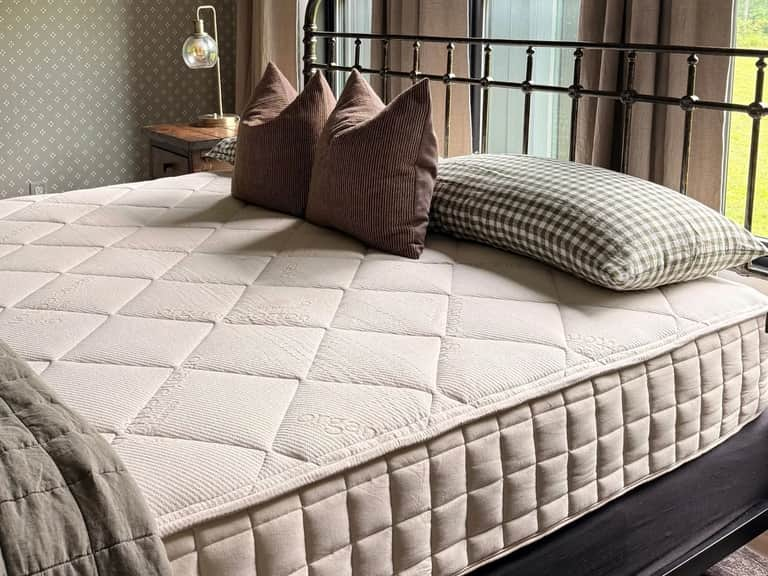
The Naturepedic Serenade Organic Hybrid Mattress is described with a layered construction: an organic Dunlop latex comfort layer, encased coils, organic wool, and organic cotton. The product information also identifies different comfort options and discusses certification claims. That kind of component-by-component description gives readers a starting point for asking which standard applies to which material.
The example is useful as a reading exercise, not as a blanket conclusion about every organic hybrid mattress. When comparing any model, confirm the current specification for the exact version you are considering. Product construction, available firmness options, and certification documentation can vary by model or over time. The most helpful description is one that connects each material to its layer and names the supporting standard where applicable.
Claims that sound similar but mean different things
Labels often place several appealing terms close together. It helps to resist the temptation to treat them as synonyms. A plain-language definition can make the differences clearer:
- Natural: A broad descriptor that needs context; it does not, by itself, establish an organic certification.
- Organic: A claim related to production under a particular standard. Check which material and scope it refers to.
- Certified organic: A claim supported by a named certification, which should be verified for the relevant component or product.
- Low emissions: A claim about emissions under a defined testing program, not necessarily about organic sourcing.
- Untreated or undyed: Describes a stated finishing choice; it does not independently certify the fiber’s origin.
- Hypoallergenic: A broad product claim that is not a guarantee that no individual will react to a material.
Likewise, “organic materials” in a product headline may refer to selected components rather than the entire mattress. A clear explanation should specify which ones. If a listing uses a prominent umbrella claim but offers no layer-by-layer details, treat that as an invitation to ask for documentation rather than as proof of an all-organic construction.
Care, construction, and the life of the mattress
Reading material labels is only part of choosing bedding. Construction determines how a mattress should be supported, rotated, cleaned, and maintained. Latex mattresses can have different care instructions depending on whether the core is enclosed, whether the cover is removable, and how the layers are assembled. Wool and cotton components can also have specific handling requirements.
Before purchase, find the care instructions and warranty terms. Check whether the mattress should be rotated, whether it can be flipped, and what kind of foundation is recommended. Do not wash an encased mattress or remove a cover unless the manufacturer explicitly says that is appropriate. Improper cleaning may damage materials or affect warranty coverage.
Be cautious about assuming that a material label predicts lifespan. Durability depends on the design, material quality, construction, use, and maintenance. A certification may verify particular sourcing or processing criteria, but it is not a substitute for a warranty or a durability test. Look at those documents separately.
A simple comparison checklist
When two products both use the word “organic,” compare their details side by side. This keeps the focus on useful evidence instead of competing headlines.
- What materials make up the core, comfort layers, cover, and batting?
- Is the latex identified as natural rubber latex, synthetic latex, or a blend?
- Which components are specifically described as organic?
- Which named certifications support each claim, and what is their scope?
- Are material percentages or layer measurements provided?
- What are the cleaning, rotation, and support requirements?
- Can the manufacturer provide current documentation for the exact model?
- Are comfort, return, and warranty terms explained separately from material claims?
The bottom line
Organic latex bedding can bring together several different materials, but the words on the label are only the beginning of the story. Latex, cotton, and wool each have distinct roles, sourcing questions, and care needs. Certifications can make claims easier to assess when you know which standard applies and what it covers.
For a clearer comparison, look past the headline and map the construction layer by layer. Match each organic claim to a specific material, connect each certification to its scope, and read care instructions before deciding. That small bit of label detective work makes it easier to understand what a mattress is made of—and what the product description is actually promising.