Sleep surfaces explained
A Practical Guide to Evaluating Natural Latex Sleep Surfaces
Natural latex has a reputation for a springy, buoyant feel: it cushions the body, then responds quickly when you move. But “latex” is not a single sleep experience. Firmness, thickness, manufacturing method, cover, and the layers beneath it all affect how a mattress or topper feels. Here’s how to look past broad labels and compare the details that matter to your comfort.
Published October 6, 2026
Start with the feel, not the label
When people describe latex as responsive, they mean it tends to spring back after pressure is applied. Instead of slowly forming a deep impression around the body, as some sleepers experience with memory foam, latex generally compresses and rebounds more readily. That buoyancy can make changing position feel easy, while the surface still provides some contouring around areas such as the shoulders and hips.
Those are general tendencies, not guarantees. A soft latex layer can feel quite different from a firm one, and a thin layer over a supportive mattress will behave differently from a thick, all-latex construction. The cover and the underlying base matter, too. That’s why a material name alone cannot tell you whether a sleep surface will suit your preferences.
It helps to think of comfort as a combination of factors rather than a single feature. How much the surface gives way, how quickly it rebounds, whether it allows your body to settle evenly, and how it behaves as you move all contribute to the overall impression. If possible, evaluate the complete mattress or topper setup—not just the latex material in isolation.
Natural latex: what the term tells you—and what it doesn’t
Natural latex is made using latex harvested from rubber trees. In a finished sleep product, the latex may be one part of a layered design, and the product may also contain fabric covers, adhesives, or other materials. The word “natural” is useful, but it is not a full specification. It does not, by itself, explain the exact composition, manufacturing method, firmness, or environmental credentials of an item.
Look for a clear materials description that distinguishes the latex from the cover and any other components. If a manufacturer uses a percentage claim, check what that percentage refers to and whether it applies to the whole product or only the latex layer. Where certifications are mentioned, confirm which materials or qualities they cover. A certification can provide helpful verification within its scope, but it should not be treated as a blanket promise about every feature of a mattress.
It is also worth separating “natural latex” from terms that describe how latex is processed. Dunlop and Talalay are two common manufacturing methods. Both can produce latex foam, but the processes differ, and products made by either method can vary in feel and specifications. The method may be one clue when comparing options; it is not a reliable shortcut for deciding which surface is softer, more supportive, or better for you.
Firmness is personal—and it is not the same as support
Firmness describes the initial feel of a surface: whether it seems soft, medium, or firm when you lie down. Support is about how the sleep system holds you and distributes your weight. The two are related, but they are not interchangeable. A surface can feel plush at first while still providing a stable layer underneath; another can feel firm without being a good match for someone’s preferred sleeping position.
Labels such as “soft,” “medium,” and “firm” are not universal measurements. One company’s medium may feel different from another company’s, and the final feel can change when a topper sits on a mattress with a different level of firmness. Body size, shape, sleep position, and personal preference also affect how much a surface compresses under you.
When evaluating latex firmness, ask for the manufacturer’s specific description and, where available, a consistent technical measure. ILD, or indentation load deflection, is one measure used to describe the force required to compress a foam sample by a specified amount. It can help with comparisons when the test conditions and specifications are comparable, but it is not a direct prediction of comfort. A number should be considered alongside construction, thickness, and the complete sleep setup—not treated as a universal comfort score.
Think about your own experience rather than searching for a perfect number. Do you prefer a gently cushioned surface or a more level, substantial feel? Does your current mattress feel too hard at the shoulders or hips, or does it seem to let your middle sink too far? Those observations can help you identify whether you are looking for more surface cushioning, a firmer foundation, or a different overall construction.
Thickness and layers shape the experience
Thickness is one of the most practical details to compare. A thinner latex layer typically makes a more modest change to the surface beneath it. A thicker layer can create a more noticeable shift in cushioning and contouring, though the result still depends on firmness and the mattress below. A topper can change the feel of a bed, but it cannot reliably correct every underlying issue, such as a sagging or damaged mattress.
In a layered mattress, the top comfort layer and the deeper support layers have different jobs. The upper layer is the first point of contact and often influences how soft or pressure-relieving the bed feels. Lower layers may help form the mattress’s more substantial support structure. When specifications list multiple layers, look for their individual materials, thicknesses, and firmness descriptions rather than relying only on a summary phrase such as “balanced comfort.”
For a topper, consider its thickness in relation to the current mattress. A topper that is too thick or too soft for your preference may make the bed feel less stable, while a very thin layer may not create enough of a change. There is no single ideal thickness for everyone. The goal is to understand how much adjustment you want and whether the underlying mattress is still in sound condition.
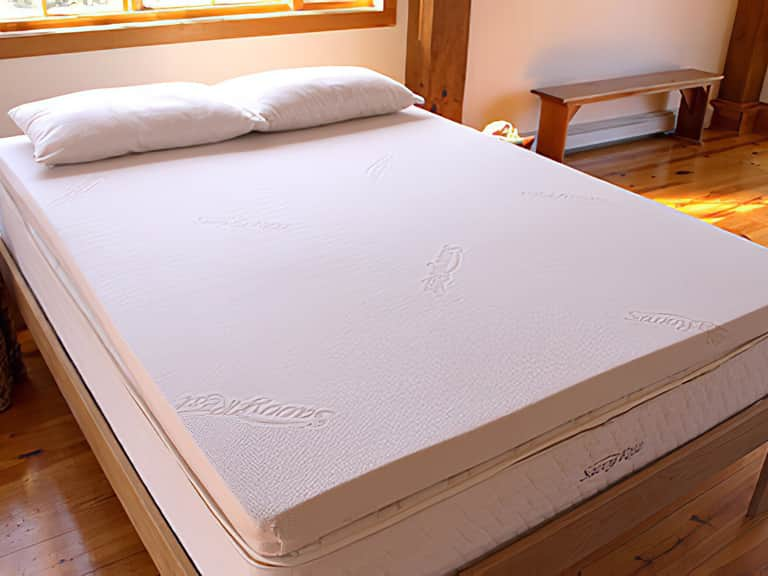
For instance, the Savvy Rest Vitality Latex Mattress Topper is described as a three-inch layer of soft natural Talalay latex in an organic cotton stretch-knit cover. That construction gives a reader concrete details to evaluate—latex type, stated firmness, thickness, and cover—without making those specifications a universal recommendation. Whether it is suitable depends on the existing mattress and the sleeper’s preferences.
Consider how you sleep—and how you move
Sleep position offers a useful starting point, not a rulebook. Side sleepers often pay close attention to how a surface feels at the shoulder and hip, since these areas may press more deeply into the mattress. Back sleepers may focus on whether the surface feels even and supportive along the torso. Stomach sleepers commonly prefer to avoid a sensation of excessive sinking, particularly around the midsection. Individual bodies and preferences vary, so these are questions to consider rather than prescriptions.
Combination sleepers—people who change positions during the night—may notice how easily the surface responds when they roll or reposition. Latex’s buoyant quality can feel different from a slower-responding foam, but the entire build still counts. A thick, soft comfort layer over a yielding base may feel quite different from a firmer, more restrained design.
If two people share a bed, compare needs on both sides of the equation. Different body types and comfort preferences can make one shared firmness feel unlike the ideal for each sleeper. Check whether the product’s construction allows different firmness choices on separate sides, and ask how the mattress performs at the center and edges. Those details may matter more than a headline material description.
Temperature, breathability, and the cover
Sleep temperature is influenced by more than the foam itself. Room conditions, bedding, nightwear, personal temperature preferences, and the mattress cover all play a part. Latex is often described as breathable, but the exact experience depends on the product’s design and the materials around it. A tightly quilted cover, multiple layers, or heavy bedding can affect how air and warmth move through a sleep setup.
Read the cover specification as carefully as the latex specification. Fabric type, quilting, and whether the cover is removable can affect feel and care. A stretchy cover may allow the layer beneath it to respond more directly, while a thicker quilted cover may change the way the surface feels. Neither design is automatically better; the important point is that the cover is part of the sleep surface, not merely packaging.
If you tend to feel warm at night, avoid relying on a single material claim to predict temperature comfort. Look at the full stack: mattress, topper, protector, fitted sheet, and blankets. A highly insulated protector or thick bedding can alter the feel of an otherwise breathable arrangement. Make small changes one at a time so you can tell which part of the setup makes a difference.
Construction details worth checking
Before comparing prices or broad comfort claims, gather the basic facts. Is the product a mattress, a topper, or a latex layer within a larger mattress? How many layers does it contain? What is the thickness of each one? Is the latex described as natural, blended, or synthetic, and is that description clear? What material forms the cover, and can it be removed?
- Check the stated latex type and whether the maker explains the composition.
- Compare firmness descriptions, noting that labels may not be consistent across brands.
- Record the thickness of each latex layer, not only the overall mattress height.
- Look for details about the base or support layers beneath the comfort layer.
- Review the cover fabric, construction, and care instructions.
- Read warranty and trial terms carefully, including exclusions and return conditions.
These questions are useful because marketing language can make unlike products sound similar. Two mattresses may both be described as “natural latex,” while differing in thickness, cover, layer arrangement, or firmness. A simple comparison chart can keep the practical differences visible and prevent one appealing adjective from doing all the work.
A realistic approach to testing comfort
A brief showroom visit can offer a first impression, but it cannot perfectly reproduce a full night at home. If you test a surface in person, spend enough time in your usual sleep positions to notice how it feels at the shoulders, hips, and lower back. Pay attention to whether you feel comfortably settled or as though you are perched on top. Try changing positions, too; the transition can reveal whether the response feels natural to you.
When an at-home trial is available, read the terms before the purchase. Check the trial length, any required break-in period, return fees, pickup arrangements, and rules about the condition of the product. A trial is most informative when you keep the rest of your sleep setup fairly consistent and give yourself time to become accustomed to the new surface. One night can be revealing, but it may not tell the whole story.
Keep a short comfort log rather than relying on a vague memory. Note the position you woke in, whether the surface felt too firm or too yielding, how easy it was to turn, and whether the sensation changed over several nights. This is not a medical assessment; it is a practical way to identify patterns in your own comfort.
Care and longevity begin with the instructions
Latex construction and covers can have different care requirements, so follow the manufacturer’s guidance for the specific product. Do not assume that a cover can be machine washed or that a latex layer should be exposed to water. Some components may be spot-clean only; others may have removable covers with their own laundering instructions. Using the wrong cleaning method can damage materials or affect warranty coverage.
Protective bedding can help limit routine exposure to spills, sweat, and dust, but check that a protector fits the mattress and suits your comfort preferences. If you use a topper, confirm that it sits securely and that the fitted sheet accommodates the combined depth. Follow any rotation instructions, and avoid folding or bending a latex layer unless the manufacturer says it is safe to do so.
Durability depends on the product’s materials, construction, use, and care. Latex is often valued for resilience, but no material makes a sleep surface immune to wear. Look for clear warranty terms and understand what counts as a covered defect. A warranty is not the same as a promise that the mattress will feel unchanged indefinitely.
Common assumptions to question
“Natural” means every component is natural. Not necessarily. A product may use natural latex alongside other materials. Check the full component list and the scope of any claims or certifications.
“Firm” means more supportive. Firmness is a feel description; support is about how the whole sleep system holds the body. A firmer surface is not automatically the right choice for every sleeper.
“Talalay is always softer” or “Dunlop is always firmer.” These shortcuts overlook product-specific formulations, thicknesses, and designs. Compare the actual specifications and, if possible, the finished sleep surface.
A topper can fix any uncomfortable mattress. A topper may adjust surface feel, but it cannot restore a worn-out support structure or correct a major sag. Consider the condition of the mattress underneath before deciding what kind of change is realistic.
One material determines temperature comfort. The whole bed and bedroom influence warmth. Covers, sheets, protectors, blankets, and room conditions all contribute.
A simple comparison checklist
Before making a decision, write down what you know about each option and what remains unclear. A useful comparison should make it easier to picture the complete setup—not just repeat product descriptions. Ask these questions:
- What exactly is being evaluated: a mattress, a topper, or an individual layer?
- What is the latex composition, and how clearly is it described?
- What are the manufacturing method, firmness, and thickness?
- How does the layer sit over the mattress or support system beneath it?
- What are the cover materials and care requirements?
- Can you test the surface at home, and what are the trial conditions?
- What does the warranty cover, and what does it exclude?
If the answers are vague, contact the manufacturer or retailer for clarification before relying on assumptions. Clear specifications are especially useful when comparing products that share similar names or broad claims. If a detail matters to your decision—such as whether a cover is removable or how a return works—get the answer in writing.
The bottom line
Natural latex can offer a distinctive blend of buoyancy and cushioning, but there is no single latex feel. Firmness, thickness, layering, cover materials, and the mattress beneath the surface all influence the experience. The most helpful comparison begins with your own comfort preferences, then checks those preferences against clear product specifications.
Rather than treating “natural latex” as a complete answer, look closely at what the product contains and how it is built. Consider your usual sleep position, how easily you move, the feel of your current bed, and the care you are willing to provide. With those details in view, it becomes easier to compare latex sleep surfaces calmly and choose an option based on fit—not hype.